Audit Logs
Audit Logs
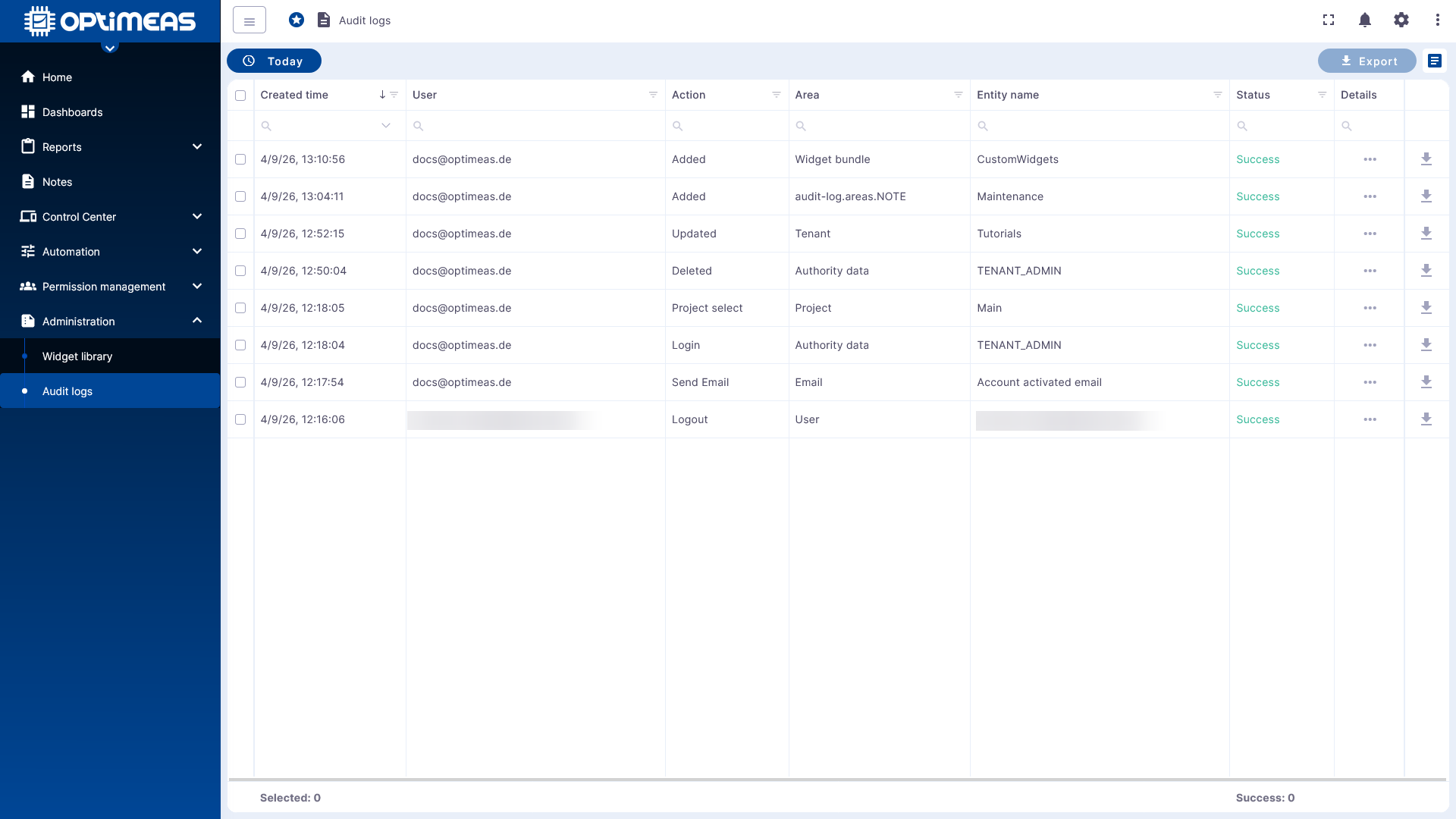
The Audit Logs document actions and changes across the entire tenant. They serve to make administrative and technical processes traceable, thereby supporting control, analysis, and audit compliance.
Purpose of Audit Logs
All relevant log entries are consolidated tenant-wide in the audit log section. Depending on their permissions, users can view and evaluate these entries.
The logs are particularly helpful for:
- Track changes to entities
- Make user actions transparent
- Analyze errors or unexpected changes
- Document administrative processes in an audit-proof manner
Filtering by Time Period
In the top-left corner, there is a date selector that allows you to narrow down the displayed time period. This enables you to view log entries specifically for a particular day or a defined time period.
This is particularly helpful when you only want to investigate changes related to a specific event, a malfunction, or an administrative action.
Table Structure
The audit log table displays the following information for each entry, among other details:
- Created time as the timestamp of the log entry
- User as the responsible user
- Action as the action performed
- Area as the affected functional or object area
- Entity name as the name of the affected entity
- Status as the result of the action, for example, successful or failed
Additional information about an individual log entry can be viewed in the detail view.
Export and Retention
Log entries are stored in an audit-proof manner and cannot be deleted. This ensures traceability is maintained over the long term.
At the same time, audit logs can be exported for further analysis outside the platform, for archiving, or to be made available for audit and verification purposes.
Practical Recommendations
Audit logs should be used regularly, especially for administrative changes, permission adjustments, configuration changes, or troubleshooting. Combined with a clear user and role structure, this creates a robust foundation for transparency and control in ongoing platform operations.